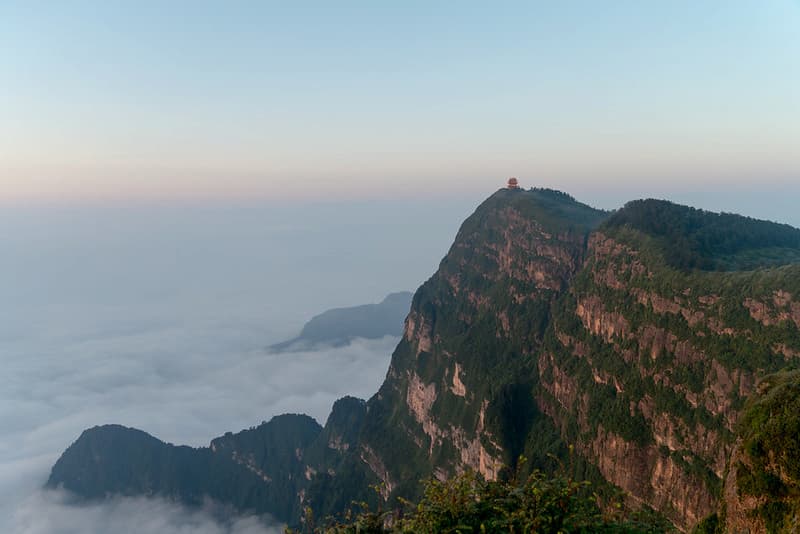
The Mount Emei Scenic Area, including the Leshan Giant Buddha Scenic Area, is a “mixed” UNESCO World Heritage site in Sichuan Province, China. It is a rare destination that combines profound spiritual heritage with spectacular geological and biological diversity.
The property consists of two geographically distinct but culturally linked areas:
- Mount Emei: Standing at 3,099m (10,167ft), it is the highest of China’s four sacred Buddhist mountains. It is a massive block of limestone and basalt rising abruptly from the edge of the Sichuan Basin. The mountain is dotted with over 30 ancient monasteries, including the Wannian Temple and the shimmering Golden Summit (Jinding), which houses a 48m tall multi-faced bronze statue of the Bodhisattva Samantabhadra.
- Leshan Giant Buddha: Located about 35km from Mount Emei at the confluence of the Min, Dadu, and Qingyi rivers, this is a colossal stone statue of Maitreya (the future Buddha). Carved directly into a red sandstone cliff during the Tang Dynasty (713-803 AD), the Buddha stands 71m (233ft) tall. Its shoulders are 28m wide, and its smallest toenail is large enough for a person to sit on.
Attraction
- The “Buddha is the Mountain”: The Leshan Giant Buddha is a marvel of ancient engineering. Visitors are captivated by the scale of the statue, which was built to calm the turbulent river waters that once sank passing ships.
- The “Silver World”: Mount Emei is famous for its “four wonders”: the Golden Summit sunrise, the Sea of Clouds, the “Buddha’s Light” (a rare halo phenomenon), and the Holy Lanterns.
- Spiritual Pilgrimage: As the seat of Samantabhadra, it is a global center for Buddhist practice. The sight of monks chanting amidst the mountain mist provides a serene experience that contrasts with the bustle of modern China.
- Living Nature: The mountain is a “Kingdom of Plants,” featuring thousands of species and a famous population of wild Tibetan Macaques that interact (sometimes too boldly) with tourists.

Heritage
UNESCO inscribed the site in 1996 for its exceptional cultural and natural values:
- Criterion (iv): The temples and the Giant Buddha represent a masterpiece of human creative genius and the quintessence of Chinese Buddhist architecture and art.
- Criterion (vi): Mount Emei is where Buddhism was first established in China (1st century AD), making it a site of immense intangible value regarding the spread of religion in East Asia.
- Criterion (x): The mountain spans a vertical elevation of over 2,600m, creating a unique “biological garden” with over 3,200 plant species, many of which are endemic or ancient relics from the Tertiary period.
Gateway
The primary gateway to the region is Chengdu, the capital of Sichuan Province.
- Commercial Airports: Chengdu is served by two major international airports: Chengdu Shuangliu (CTU) and the newer Chengdu Tianfu (TFU).
- Lodging: Chengdu is a global metropolis with thousands of hotels, ranging from luxury international chains (Ritz-Carlton, St. Regis) to boutique hostels.
- Logistics: From Chengdu, you can reach Leshan or Emeishan city in about 1 hour via the high-speed intercity railway.
When
- Spring (April to May): The ideal time for hikers. The weather is mild, and the mountain is covered in blooming Rhododendrons.
- Autumn (September to November): The foliage turns brilliant shades of gold and red, and the visibility is often at its highest, increasing your chances of seeing the “Sea of Clouds” from the summit.
- Winter (December to February): A “low season” but beautiful for those who enjoy snow-covered temples. It is also the best time for the hot springs at the base of the mountain.

Consideration
- Physical Stamina: Climbing Mount Emei on foot can take two full days. Most visitors use the shuttle bus and cable car to reach the summit, but there is still significant walking on steep stone stairs.
- The “Monkey Tax”: The monkeys on Mount Emei are wild and notoriously aggressive. Do not carry food in your hands, keep your bags zipped, and do not attempt to pet them. They are known to snatch bags they suspect contain snacks.
- Temperature Variation: The temperature at the Golden Summit can be 15°C cooler than at the base. Even in summer, you will need a thick jacket (rentals are available at the top).
- Crowd Management: These are extremely popular sites. During Chinese National holidays or “Golden Week,” wait times for the Leshan boat tour or the Emei cable car can exceed three hours.

Resources
- UNESCO World Heritage Centre – Official historical data and maps of the protected zones.
- Trip.com – A reliable platform for booking high-speed train tickets from Chengdu and local hotels (this site earns a commission on bookings).
- China Highlights – Detailed logistics for the “Walking vs. Boat” options at Leshan.
- TravelChinaGuide – Practical information on ticket prices, bus schedules, and opening hours.
- IUCN World Heritage Outlook – Scientific reports on the biodiversity and conservation status of the mountain’s flora and fauna.
Featured Image
Mount Emei (George N, Flickr/CC BY 2.0).
In The News
Advertisement



Advertisements
Advertisements
Advertisements
Advertisements
Comment:
 All About World Heritage Sites (...and more)
Leave a comment