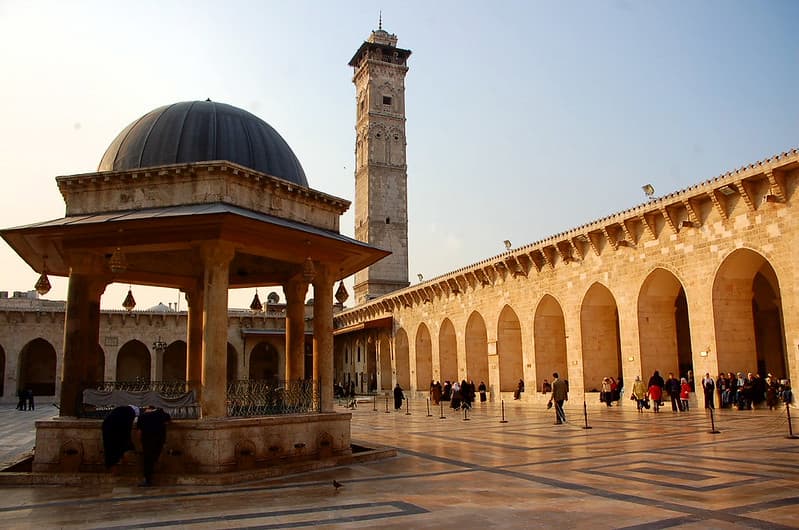
The Ancient City of Aleppo, one of the oldest continuously inhabited urban centers in the world, is a sprawling historical palimpsest in northern Syria. For millennia, it served as a vital crossroads for the Silk Roads, linking the Mediterranean to the Euphrates Valley. While the city suffered catastrophic damage during the Syrian Civil War and the 2023 earthquakes, 2026 marks a period of significant, internationally supported restoration.
The site is a 350-hectare labyrinth of limestone courtyard houses, narrow alleys, and monumental architecture.
- The Citadel: A massive medieval fortified palace sitting atop a 50-meter-high mound, considered a masterpiece of Islamic military architecture.
- The Souks: The Al-Madina Souq is one of the world’s largest covered markets, stretching over 13 km. Many sections have been meticulously restored using traditional stone-cutting techniques.
- Religious Landmarks: The 12th-century Great Mosque of Aleppo (Umayyad Mosque) and various Ottoman-era madrasas (schools) and khans (caravanserais).
Attraction
Aleppo attracts travelers through its resilience and authenticity:
- Living History: Unlike a museum, the Old City is a functional heart where artisans still weave silk, boil traditional laurel soap, and trade spices.
- Architectural Layering: Visitors can see Hittite, Roman, Byzantine, Ayyubid, and Ottoman remains physically stacked atop one another.
- Gastronomy: Aleppo is widely regarded as the culinary capital of the Middle East, famous for its kibbeh (over 17 varieties) and cherry-infused kebabs.

Heritage
Inscribed in 1986, Aleppo is protected under Criteria (iii) and (iv):
- Criterion (iii): It provides an exceptional testimony to the diverse cultures that settled here over 4,000 years, including the Hittites, Assyrians, Greeks, and Romans.
- Criterion (iv): It is an outstanding example of a medieval Islamic city, particularly from the 12th-century Ayyubid era, characterized by its urban fabric and military fortifications.
Gateway
- Gateway: The city itself serves as the gateway.
- Airport: Aleppo International Airport (ALP) has resumed commercial operations, with regular connections to Damascus and select regional hubs.
- Lodging: Reopening heritage hotels provide unique stays. Options include the Sheraton Aleppo and boutique guesthouses like Beit Salahieh (located directly opposite the Citadel) or the restored Dar Zamaria.
When
- Spring (March to May): The most pleasant time, with mild temperatures and blooming flora.
- Autumn (September to October): Ideal for exploring the souks and outdoor sites without the intense summer heat.
- Tip: Avoid July and August, when temperatures can exceed 35°C.

Considerations
- Safety Status: While tourism is returning, most Western governments still maintain “Do Not Travel” advisories due to regional instability. Check your local embassy’s current status before booking.
- Entry Requirements: Most travelers require a visa and must be part of an organized tour or have a local sponsor.
- Photography: It is strictly prohibited (and legally dangerous) to photograph military checkpoints or government buildings.
- Cash Economy: Due to international sanctions, Western credit/debit cards often do not work. You must bring sufficient cash (USD or EUR) to exchange for Syrian Pounds (SYP).

Resources
- UNESCO World Heritage – Aleppo: The official record of the site’s history and ongoing restoration.
- Syrian Guides: A local resource for real-time airport and visa updates.
- Aga Khan Trust for Culture: Information on the major restoration projects in the Souks and Citadel.
- ZenHotels – Aleppo: A platform for checking current hotel availability in the city.
- Viator: Useful for finding specialized guided tours that navigate current security protocols.
Featured Image
Great Mosque of Aleppo (Dan, Flickr/CC BY-SA 2.0).
In The News
Advertisement


Comment:
 All About World Heritage Sites (...and more)
Leave a comment