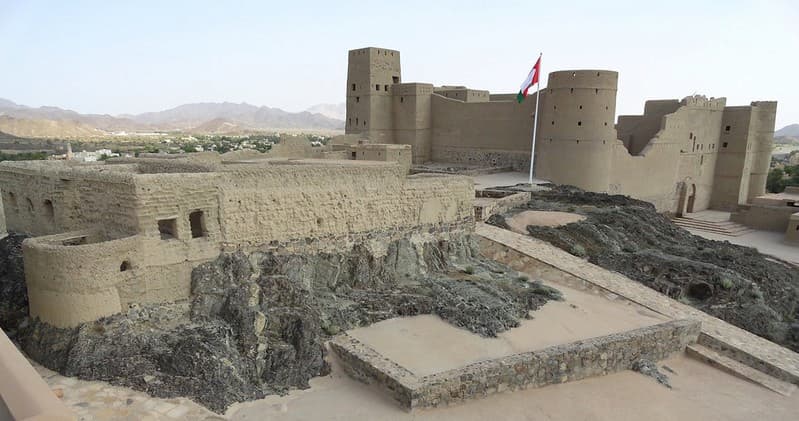
Deep in the heart of the Ad Dakhiliyah region, Bahla Fort stands as a colossal monument to Omani ingenuity and the power of the Banu Nebhan tribe. It is not just a building; it is a sprawling fortified oasis that has survived centuries in the harsh desert landscape.
Bahla Fort is a massive, sand-colored citadel constructed primarily of mud-brick (adobe) and stone. It dominates the skyline of the Bahla oasis, a lush palm grove that contrasts sharply with the surrounding arid plains. The site is part of a larger complex that includes:
- The Citadel (Al-Qasbah): The oldest part of the fort, featuring rounded towers and high battlements.
- The Sur (Outer Wall): A remarkable 12-kilometer-long defensive wall that once completely encircled the town, its palm groves, and its water sources.
- The Friday Mosque: Located just outside the fort, this 14th-century mosque is famous for its intricate, decoratively sculpted prayer niche (mihrab).
- The Falaj System: An ancient network of underground channels and wells that continues to irrigate the oasis today, a testament to medieval water engineering.
Attraction
Bahla attracts travelers seeking a raw, less-commercialized look into Arabian history.
- Scale and Grandeur: As the largest fort in Oman, its maze-like interior of staircases and courtyards offers a sense of exploration that more polished forts lack.
- Local Legends: Known locally as the “City of Magic,” Bahla is steeped in folklore. Tales of genies (jinn) building the fort’s walls overnight or of mystical events occurring within its towers add a layer of intrigue.
- Living Heritage: The town remains a center for Omani pottery. Visitors can watch craftsmen shape clay using traditional kilns, a craft that has defined the region for millennia.

Heritage
Inscribed in 1987, Bahla Fort was the first site in Oman to receive UNESCO recognition. It satisfies Criterion (iv):
- Defensive Architectural Ensemble: It is an outstanding example of a fortified oasis settlement from the medieval Islamic period. Its “pre-gunpowder” style—characterized by mud-brick construction and strategic watchtowers—demonstrates how tribal elites maintained power and protected vital resources like frankincense and water.
- Water Management: The integration of the Falaj irrigation system into the urban fabric shows an advanced understanding of hydrology that allowed the settlement to thrive in a desert environment.
Gateway
The primary gateway to Bahla is the capital city, Muscat.
- Airport: Muscat International Airport (MCT) is the main commercial hub, located approximately 200 km (a 2-hour drive) from Bahla via modern, well-paved highways.
- Lodging: While Bahla has local options like the Bahla Hotel Apartments, most international travelers base themselves in the nearby city of Nizwa (40 km away). Nizwa offers a range of stays, from heritage inns like Antique Inn to modern luxury at the Golden Tulip.
When
- Winter (October to March): This is the gold standard for visiting. Temperatures range from 15°C to 28°C (59°F–82°F), making it comfortable to climb the steep, sun-exposed ramparts.
- February is ideal as it often coincides with cultural festivals in the nearby Dakhiliyah region, where traditional dances and crafts are showcased.
- Time of Day: Arrive at 8:00 AM to beat the heat and the small crowds, or visit in the late afternoon for the “golden hour” photography over the palm groves.

Consideration
- Dress Code: Oman is a deeply traditional society. Visitors should wear modest clothing that covers shoulders and knees. Women do not need to cover their heads at the fort, but it is required if visiting the nearby mosques.
- Physical Activity: The fort is a “vertical” experience. Expect to climb many uneven, steep stone steps. Comfortable, closed-toe walking shoes are essential.
- Cash and Fees: The entry fee is approximately 5 OMR (~$13 USD). While some counters accept cards, it is wise to carry cash for the nearby traditional souq (market).
- Respect the Jinn: While the “magic” of Bahla is a fun talking point, be respectful of local beliefs. Locals take the city’s supernatural reputation quite seriously.

Resources
- UNESCO – Bahla Fort: The official archive of its heritage status and architectural history.
- Experience Oman: The Ministry of Heritage and Tourism’s portal for current travel alerts and regional guides.
- Oman Wanderlust: A detailed travel blog that provides logistical tips for exploring the “forts and castles” route.
- Oryx Tourism: A local operator site providing deep dives into the legends and historical phases of the fort.
- Booking.com – Bahla & Nizwa Stays: The best platform for securing lodging in the Ad Dakhiliyah region with user reviews.
Featured Image
Bahla Fort (Fabio Achilli, Flickr/CC BY 2.0).
In The News
Advertisement

Comment:
 All About World Heritage Sites (...and more)
Leave a comment