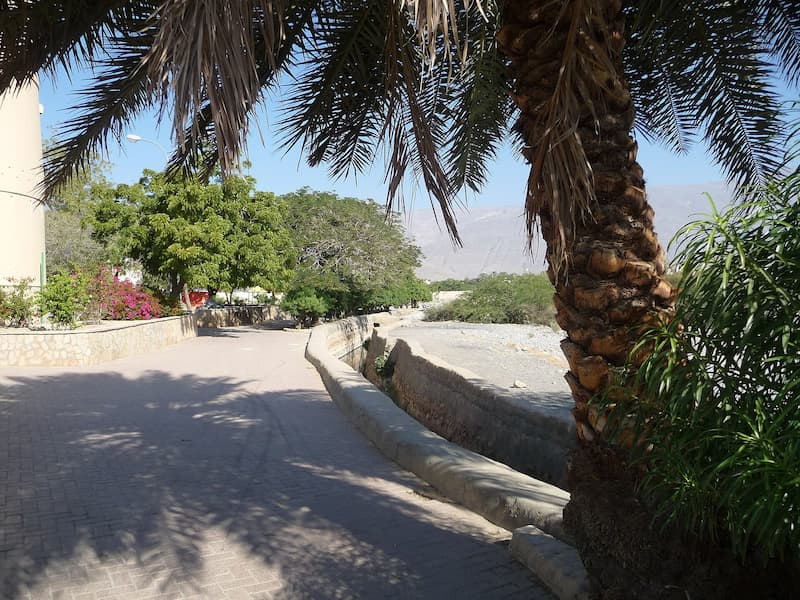
The Aflaj Irrigation Systems of Oman represent a 5,000-year-old engineering masterpiece that transformed the arid Omani landscape into a lush network of oases. The word Aflaj (plural of Falaj) means “divided into shares,” referring to the equitable distribution of water that remains the heart of Omani village life.
The UNESCO-listed property comprises five specific systems: Falaj Daris, Falaj Al-Khatmeen, Falaj Al-Malki, Falaj Al-Muyassar, and Falaj Al-Jeela. These represent roughly 3,000 active systems across the country.
- Mechanism: Using only gravity, these systems tap into underground aquifers (Dawoodi), mountain springs (Ainy), or wadi surface water (Ghaili).
- Components: The water is funneled through long underground tunnels and open surface channels, often stretching for kilometers with a precise gradient (between 1:500 and 1:2500) to prevent erosion while maintaining flow.
- Infrastructure: The sites feature access shafts for maintenance, sundials for timing water distribution, and defensive watchtowers built to protect the community’s most precious resource.
Attraction
Aflaj systems are a major attraction because they offer a “living museum” experience:
- Engineering Marvel: Visitors are awed by the ancient ability to calculate hydrological gradients without modern tools.
- Cultural Connection: Unlike static ruins, these systems are fully operational. You can watch local “Wakils” (water managers) calculate water rights using traditional methods.
- Scenic Beauty: The aflaj create stunning green ribbons of date palms and tropical fruit trees that contrast sharply with the surrounding jagged, sun-scorched mountains.

Heritage
Inscribed in 2006, the site met Criterion (v):
- It is an outstanding example of a traditional human settlement and land use that is representative of a culture. The Aflaj represent a uniquely sustainable way of managing scarce water resources in an extremely arid environment. They reflect communal values, mutual dependence, and an ancient social structure that has survived for millennia.
Gateway
- The City: Muscat is the primary international gateway, while Nizwa serves as the localized hub for the most famous aflaj.
- Airport: Muscat International Airport (MCT) is the major commercial hub.
- Lodging: Nizwa offers excellent lodging like the Golden Tulip Nizwa or the Intercity Hotel Nizwa. For those visiting the mountain aflaj, luxury resorts like Anantara Al Jabal Al Akhdar provide a high-altitude base.
When
- October to April: The cooler winter months (averaging 20^C to 25^C) are best for walking along the channels and exploring the associated mountain villages.
- September: A great time to witness the date harvest, which is directly sustained by the irrigation systems.

Consideration
- Respect Local Privacy: Many aflaj run through residential areas and past mosques. Always dress modestly (shoulders and knees covered) and avoid walking into private farms without an invitation.
- Stay Out of the Water: The water is used for drinking and domestic purposes further downstream. Do not wade or wash your feet in the channels unless at a designated public ablution area.
- Navigation: Some of the five sites, like Falaj Al-Jeela, are in remote mountain locations requiring a 4WD vehicle and confident off-road driving skills.
- Sun Protection: Even in winter, the Omani sun is intense. High-SPF sunscreen and a wide-brimmed hat are non-negotiable.

(Thomas Liptak, Wikimedia/CC BY-SA 4.0).
Resources
- UNESCO World Heritage – Aflaj: The definitive source for historical data, maps, and conservation status.
- Experience Oman: The official Ministry of Tourism site for travel logistics and regional guides.
- Global Network of Water Museums – Omani Aflaj: An excellent deep-dive into the technical and social typology of the systems.
- Oman Observer – Heritage Section: A local English-language news source that frequently features articles on the restoration and culture of the aflaj.
- Viator – Oman Desert & Nizwa Tours: A reliable platform to book guided day trips from Muscat that include visits to Falaj Daris and Birkat Al Mouz.
Featured Image
Falaj Daris (Lagerschaden, Wikimedia/CC BY-SA 4.0).
In The News
Advertisement


Comment:
 All About World Heritage Sites (...and more)


Leave a comment