The Archaeological Site of Sabratha is a remarkably well-preserved ancient city located on the Mediterranean coast of northwestern Libya, approximately 70 kilometers west of Tripoli. Originally established as a Phoenician trading post to service trade routes between the African hinterland and the Mediterranean, it later became a significant Roman city.
Sabratha’s ruins present a distinct blend of Punic, Roman, and Byzantine influences, arranged around a coastal layout.
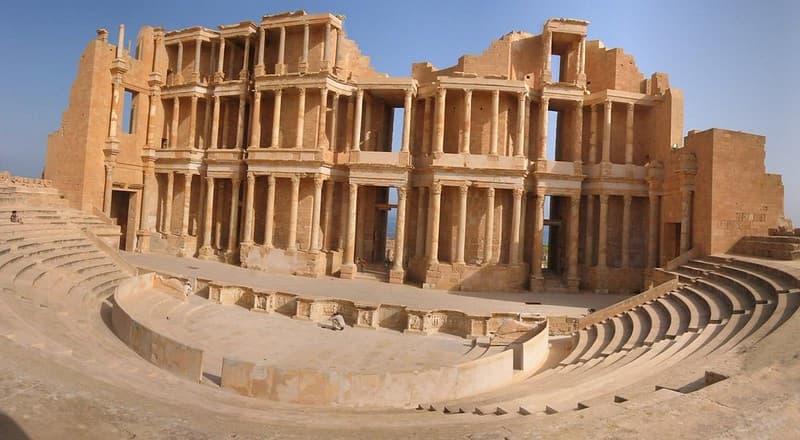
- The Roman Theatre: The site’s undisputed masterpiece, this 2nd-century theater is one of the largest in North Africa, originally seating roughly 5,000 spectators. Its restored scaenae frons (stage backdrop) features three tiers of columns and intricate marble sculptures.
- The Forum and Temples: The city center features the Forum, surrounded by colonnaded walkways and temples dedicated to Roman deities, including the Temple of Jupiter and the Temple of Isis.
- Baths and Public Buildings: Extensive remains of thermal baths, featuring preserved floor mosaics depicting sea creatures and mythological scenes, illustrate the refined Roman lifestyle.
- Byzantine Basilica: Later structures include a 6th-century Byzantine church, repurposed from earlier Roman materials.
Attraction
Sabratha draws travelers worldwide due to its unparalleled preservation and atmosphere.
- Intact Roman Architecture: Unlike many sites where only foundations remain, Sabratha offers a vivid, structural view of a Roman city, allowing visitors to walk through ancient streets and theaters.
- Coastal Setting: The dramatic juxtaposition of ancient stone ruins against the backdrop of the Mediterranean Sea provides a unique photographic experience.
- Intimacy: Compared to larger, more crowded sites in Europe, Sabratha offers a quiet, personal encounter with history.

Heritage
Inscribed in 1982, Sabratha was listed as a UNESCO World Heritage site under the following criterion:
- Criterion (iii): The site bears exceptional testimony to the cultural interchange that occurred in the Mediterranean basin during the classical period, blending Punic and Roman urban traditions.
Note: Due to political instability and conflict in Libya, the site has been listed on the List of World Heritage in Danger since 2016.
Gateway
- The City: Tripoli, the capital city of Libya, serves as the main gateway to Sabratha.
- Airport: Tripoli International Airport (IATA: MJI, though TIP is sometimes used) is the nearest commercial airport.
- Lodging: Tripoli offers a range of lodging options, from business hotels to historic guesthouses within the city’s medina.
When
- Spring (March to May) and Autumn (September to November): These months offer the most comfortable temperatures, avoiding the extreme heat of summer and the rare heavy rains of winter.

Consideration
- Security Advisories: Foreign governments currently advise against all travel to Libya due to extreme instability, risk of terrorism, armed conflict, and crime. Visiting requires a guided tour with specialized security providers.
- Archaeological Awareness: Walking in the site requires care, as many ruins are fragile.
- Sun Protection: The site is open and coastal; bring a hat, sunscreen, and plenty of water.

Resources
- UNESCO – Archaeological Site of Sabratha: Official documentation regarding the site’s history and danger status.
- African World Heritage Sites – Sabratha: Detailed maps and photographic archives of the ruins.
- Department of Antiquities of Libya: Government body responsible for the maintenance and management of the site.
- Britannica – Sabratha: General history and geographical context.
- Viator – Libya Tours: For finding organized tours that handle necessary security logistics and permits.
Featured Image
Sabratha Roman Theatre (Duimdog, Flickr/CC BY-SA 2.0).
In The News
Advertisement



Comment:
 All About World Heritage Sites (...and more)
Leave a comment