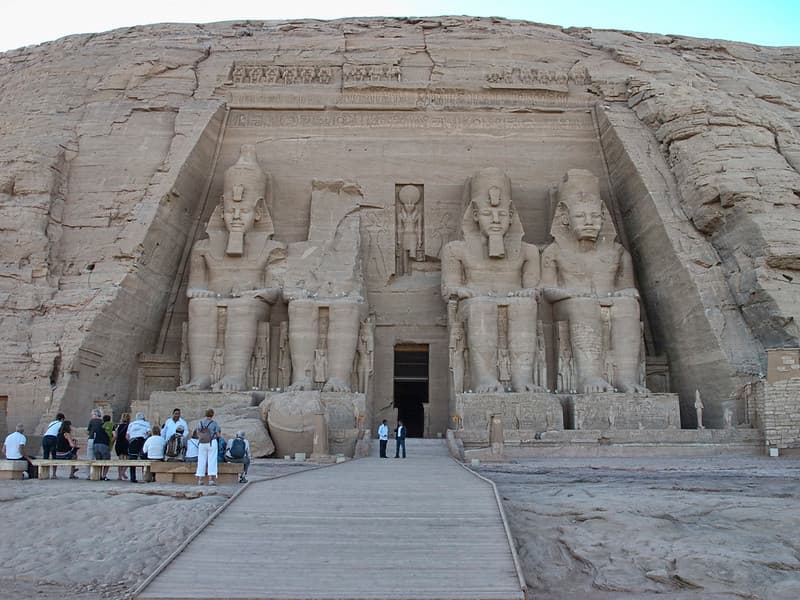
The Nubian Monuments from Abu Simbel to Philae constitute one of the most spectacular archaeological stretches in the world. Located in southern Egypt’s Aswan Governorate, this serial UNESCO World Heritage site consists of ten distinct components that showcase the grandeur of the New Kingdom, Ptolemaic, and Roman eras. At its core are the legendary temples of Abu Simbel and the sanctuary of Philae, but the site also includes other rescued gems like the temples of Amada and Wadi Sebua, as well as the Granite Quarries of Aswan, home to the famous Unfinished Obelisk.
Attraction
The Nubian monuments attract millions of visitors primarily for two reasons: their ancient majesty and their modern rescue story.
- The Colossi of Ramesses II: The Great Temple at Abu Simbel is fronted by four 21-meter-high statues of Pharaoh Ramesses II, an iconic image of ancient power.
- The Sun Miracle: Twice a year (February 22 and October 22), the rising sun aligns perfectly to penetrate the inner sanctum of Abu Simbel, illuminating the statues of the gods, except for Ptah, the god of the underworld.
- The “Island of Love”: Philae Temple, dedicated to the goddess Isis, is situated on Agilkia Island. Its Greco-Roman columns reflecting in the Nile waters make it one of Egypt’s most romantic and photogenic sites.
- Nubian Culture: Beyond the temples, the region is the heart of Nubian heritage, known for its vibrant villages, unique music, and the Nubia Museum in Aswan.

Heritage
Inscribed in 1979, the site meets Criteria (i), (iii), and (vi):
- Criterion (i): The temples are recognized as masterpieces of human creative genius, specifically the engineering of Abu Simbel and the artistic perfection of Philae.
- Criterion (iii): They provide a unique testimony to a long-vanished civilization, spanning from the 15th century BCE to the 4th century CE.
- Criterion (vi): The monuments are directly associated with the history of Ancient Egyptian religion and the global history of archaeological preservation.
Gateway
- The City: Aswan is the essential gateway. It is a serene river city known for its “slow travel” vibe compared to the hustle of Cairo.
- Airport: Aswan International Airport (ASW) serves domestic flights from Cairo (1.5 hours) and Luxor, as well as seasonal international charters.
- Lodging: Options range from the legendary Old Cataract Hotel (where Agatha Christie wrote Death on the Nile) to colorful Nubian guesthouses on Elephantine Island.
When
- October to April: This is the most comfortable window. Temperatures are pleasant for walking through unshaded archaeological zones.
- February 22 & October 22: These are the Sun Festival dates. Expect massive crowds, higher prices, and a festive atmosphere.
- Avoid Summer (June–August): Temperatures in southern Egypt can exceed 45°C (113°F), making outdoor sightseeing physically grueling.

Consideration
- The Journey to Abu Simbel: From Aswan, Abu Simbel is about 280 km (3 hours) away. Most travelers take a 4:00 AM police-escorted convoy or a short 45-minute domestic flight.
- Photography Permits: While phone photography is generally allowed, professional cameras or tripods often require a separate, paid permit at the ticket window.
- Dress Code: While there is no strict religious requirement for outdoor temples, modest clothing (covering shoulders and knees) is respectful and provides much-needed sun protection.
- Water and Hydration: Shade is virtually non-existent at Abu Simbel. Carry electrolytes and at least two liters of water.

Resources
- UNESCO World Heritage – Nubian Monuments: The official repository of maps, history, and the story of the 1960s rescue mission.
- Ministry of Tourism & Antiquities (Egypt): The official government portal for current ticket prices and opening hours.
- The Nubia Museum, Aswan: Essential for understanding the history of the people whose land was flooded to create Lake Nasser.
- Rough Guides – Visiting Abu Simbel: A practical guide for independent travelers on transport and logistics.
- GetYourGuide – Aswan & Abu Simbel Tours: Use this to book day trips from Aswan to Abu Simbel or sunset felucca rides around Philae.
Featured Image
The Great Temple (Dan Lundberg, Flickr/CC BY-SA 2.0).
In The News
Advertisement

Comment:
 All About World Heritage Sites (...and more)

Leave a comment