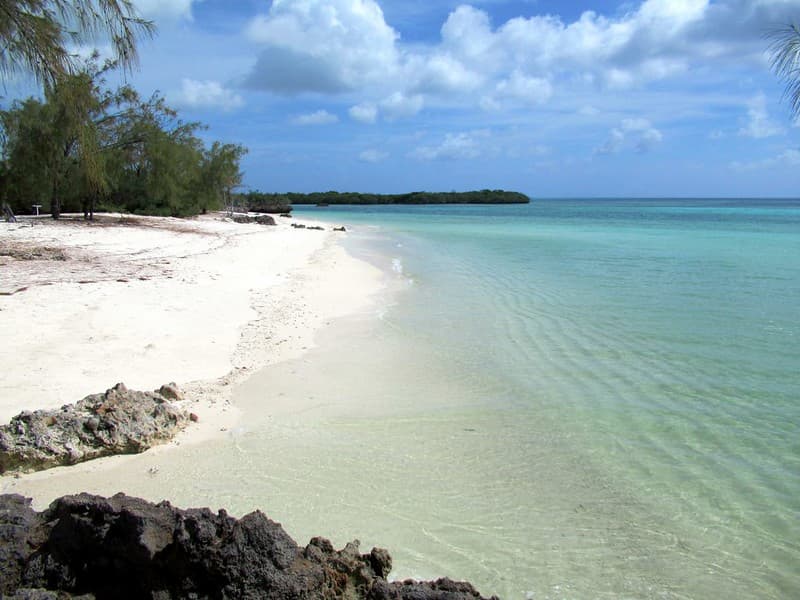
The Aldabra Atoll is one of the most remote and pristine natural wonders on Earth. Located in the Outer Islands of the Seychelles, over 1,000 kilometers from the main island of Mahé, it is the world’s second-largest raised coral atoll. The site consists of four large coral islands (Picard, Polymnie, Malabar, and Grand Terre) that encircle a massive shallow lagoon. Because of its extreme isolation, rugged “champignon” limestone terrain, and lack of fresh water, Aldabra has remained largely undisturbed by human settlement, allowing ancient evolutionary processes to continue in a nearly closed ecosystem.
Attraction
Aldabra is often referred to as the “Galápagos of the Indian Ocean.” It is a bucket-list destination for wildlife enthusiasts and researchers for several reasons:
- The Giant Tortoise: It is home to the world’s largest population of Aldabra giant tortoises (over 100,000), which are the apex herbivores on land.
- Unique Birdlife: It hosts the White-throated Rail, the last surviving flightless bird in the Indian Ocean, alongside the second-largest frigatebird colony in the world.
- Marine Biodiversity: The surrounding waters are a sanctuary for green and hawksbill turtles, manta rays, and thriving coral reefs that are considered “pristine.”

Heritage
Inscribed in 1982, Aldabra is protected under three UNESCO criteria:
- Criterion (vii): It represents superlative natural beauty with its unique landforms and vibrant marine life.
- Criterion (ix): It is a “natural laboratory” for studying evolutionary and ecological processes in an oceanic island ecosystem.
- Criterion (x): It provides a vital habitat for endangered species, including the last remaining flightless birds and the world’s largest tortoise population.
Gateway
- City: Victoria on Mahé Island is the essential gateway.
- Airport: Seychelles International Airport (SEZ) handles all international arrivals and commercial domestic flights.
- Lodging: Mahé offers extensive lodging, from the luxury Hilton Seychelles Northolme to the Eden Bleu Hotel.
- Note: There are no hotels or commercial airports on Aldabra. You must fly to Mahé and then travel to the atoll, typically via a private expedition vessel or a specialized charter flight to Assumption Island followed by a boat transfer.
When
- April to May and October to November: These are the transitional periods between trade winds. The seas are calmest, and underwater visibility is at its peak (up to 30 meters), making it the best time for diving and snorkeling.
- Avoid: December to February, which is the rainy season with high humidity and rougher seas.

(Hansueli Krapf, Wikimedia/CC BY-SA 3.0).
Consideration
- Strict Access: Tourism is highly regulated by the Seychelles Islands Foundation (SIF). You must obtain written clearance and pay an impact fee before visiting.
- Zero Impact: Visitors must be accompanied by SIF rangers at all times. You cannot remove anything—even a shell—and must follow strict biosecurity protocols (e.g., vacuuming pockets for seeds) to prevent invasive species.
- Physicality: Walking on the “champignon” limestone is treacherous and requires sturdy, closed-toe footwear.
- Cost: Due to its remoteness, a trip to Aldabra is one of the most expensive travel experiences in the world, often costing tens of thousands of dollars via luxury expedition cruises.

Resources
- Seychelles Islands Foundation (SIF): The official body that manages the atoll; essential for clearance forms and research data.
- UNESCO World Heritage Centre: The definitive record of the site’s heritage value and conservation status.
- Seychelles Travel (Official Tourism Board): For general logistics and gateway information on Mahé.
- Smithsonian Ocean Portal: Provides a deep dive into the marine biology of the atoll.
- Expedia – Seychelles Travel: Use this to book your gateway flights to Mahé and overnight lodging before joining an expedition.
Featured Image
Picard Island (David Stanley, Flickr/CC BY 2.0).
In The News
Advertisement



Comment:
 All About World Heritage Sites (...and more)

Leave a comment