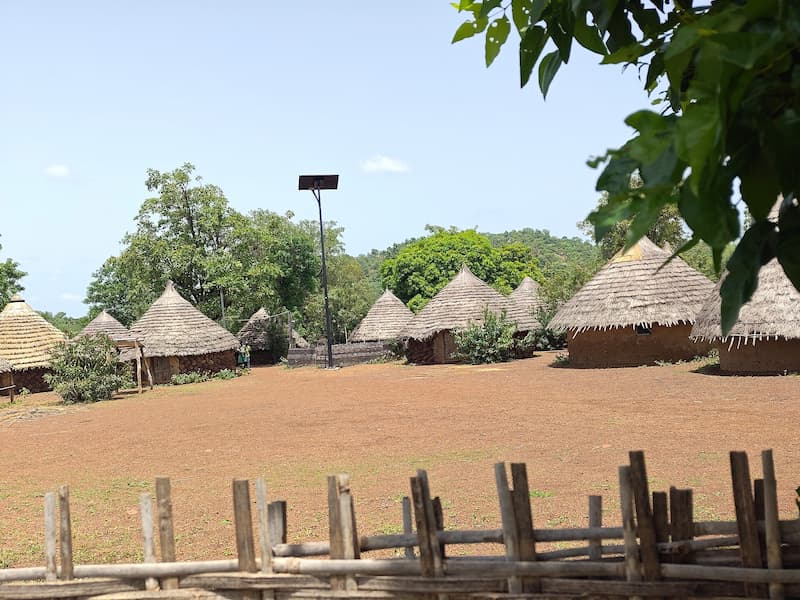
Located in southeastern Senegal, the Bassari Country: Bassari, Fula and Bedik Cultural Landscapes is a unique geographical and ethnographic area where three distinct ethnic groups—the Bassari, the Fula, and the Bedik—have developed specific lifestyles in response to their environment. This site is a rare example of a living cultural landscape where social organization, agricultural practices, and rituals have remained largely unchanged for centuries, functioning in harmony with the natural surroundings.
The site is divided into three geographical zones that correspond to the areas inhabited by the different groups:
- The Bassari area (Salémata): Known for its villages situated on high plateaus, the Bassari are traditional farmers and gatherers. Their architecture involves circular huts with thatched roofs arranged around a central community space.
- The Bedik area (Bandafassi): The Bedik inhabit the steep slopes of the Iwol and Etyolo hills. They are famous for their remarkable terraced agriculture, which allows them to cultivate the rocky slopes.
- The Fula area (Dindéfelo): The Fula are historically pastoralists who settled in the plains and valleys. Their landscape is characterized by permanent villages and intense cattle grazing activities.
Attraction
This site is a massive attraction for travelers seeking authentic cultural immersion and adventure:
- Ethnographic Richness: Visitors can witness unique initiation rituals, traditional dances, and community ceremonies that are deeply tied to ancestral beliefs.
- Stunning Landscapes: The dramatic contrast between the rugged hills, dense forests, and the lush plains creates a breathtaking backdrop for hiking and photography.
- Unspoiled Atmosphere: Unlike more commercialized tourist sites, Bassari Country offers a raw, intimate experience of traditional West African life.

Heritage
Inscribed by UNESCO in 2012, the site is recognized under Criteria (iii), (v), and (vi):
- Criterion (iii) & (vi): The area is an exceptional testimony to the cultural traditions of the Bassari, Bedik, and Fula groups, who have maintained their social organization and rituals despite external pressures.
- Criterion (v): It represents a remarkable interaction between humans and their environment. The Bedik’s terraced farming and the Bassari’s adaptation to the plateau illustrate how these communities have engineered their landscapes to survive and thrive.
Gateway
The primary gateway to the Bassari Country is the city of Tambacounda.
- Airport: Tambacounda Airport (TUD) is a commercial airport, though flights from Dakar are seasonal or infrequent. Most travelers arrive by private vehicle or bus from Dakar (an 8–10 hour drive).
- Lodging: Tambacounda serves as the best hub for overnight stays before entering the rural area. It offers several hotels, such as the Hôtel Tamba, which provide sufficient amenities.
When
The ideal time to visit is during the Dry Season (November to March).
- Weather: During these months, the temperatures are moderate, and the roads are passable.
- Cultural Events: This period coincides with many traditional festivals and initiation ceremonies, providing the best opportunities to witness local culture.
- Avoid: The rainy season (July to October), as roads become impassable, and many areas are inaccessible.

Consideration
- Accessibility and Transport: The site is remote. A 4×4 vehicle is strongly recommended, and hiring a local guide in Tambacounda or Dindéfelo is essential for navigating the area and interacting respectfully with local communities.
- Health Precautions: Malaria is endemic in this region. Travelers must take prophylaxis and use mosquito nets.
- Cultural Respect: You are visiting villages, not museums. Always ask permission before taking photos of people or their homes. Dress modestly, especially during community events.
- Infrastructure: Accommodation in the villages is limited to basic guesthouses (campements). Be prepared for minimal electricity and water amenities.

Resources
- UNESCO – Bassari Country: The official site detailing the cultural and natural importance of the area.
- Senegal Tourism Board (Official Site): Provides logistical advice and safety tips for traveling within Senegal.
- Lonely Planet – Senegal: Contains practical information on transport and guesthouses in the southeastern region.
- Dindefelo Waterfall Project: A resource dedicated to the conservation of the natural landscape near the Fula settlements.
- GetYourGuide – Senegal Tours: (Affiliate Marketing) Offers guided tours that include visits to the Bassari country from Dakar.
Featured Image
Bassari (Eric Senegal, Wikimedia/CC BY-SA 4.0).
In The News
Advertisement


Comment:
 All About World Heritage Sites (...and more)

Leave a comment