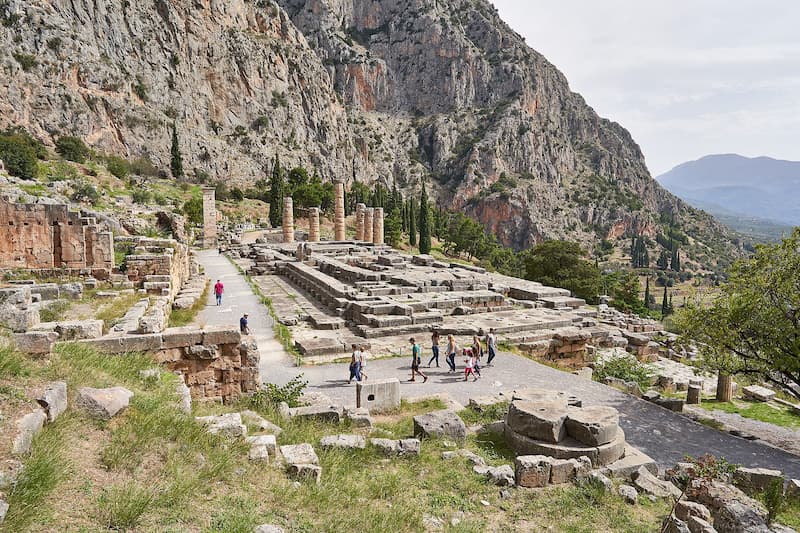
The Archaeological Site of Delphi is one of the most revered and spiritually significant locations in ancient Greece. Situated on the slopes of Mount Parnassus overlooking the Pleistos Valley, Delphi was considered the “Omphalos” (navel) of the world by the ancient Greeks, believed to be the spot where two eagles released by Zeus met.
The Delphi archaeological complex is composed of two main sanctuaries, connected by the Sacred Way, and numerous auxiliary buildings:
- Sanctuary of Apollo: The heart of the site, featuring the Temple of Apollo where the Pythia (the Oracle) delivered prophecies, surrounded by Treasuries built by various Greek city-states to store votive offerings.
- The Theater: A well-preserved 4th-century BC theater, situated above the Temple of Apollo, offering stunning views of the sanctuary and the valley.
- The Stadium: Located at the highest point of the site, it is one of the best-preserved ancient stadiums in Greece, once hosting the Pythian Games.
- Sanctuary of Athena Pronaia: Situated on a lower terrace, famous for the Tholos, a circular building of unknown function and a masterpiece of Classical architecture.
Attraction
Delphi fascinates tourists worldwide for several reasons:
- The Oracle and Mystery: Visitors are captivated by the legends of the Pythia, who, according to myth, inhaled hallucinogenic vapors from a fissure in the earth to prophesy the future.
- Stunning Natural Setting: The site is famously integrated into its dramatic mountain environment, offering unparalleled panoramic views.
- Archeological Museum: The nearby museum houses world-class artifacts, including the bronze Charioteer of Delphi, the Sphinx of Naxos, and the metopes of the Athenian Treasury.

Heritage
Inscribed in 1987, Delphi is recognized for its exceptional importance under five criteria, making it a site of immense universal value:
- Criterion (i): The layout of Delphi is a unique artistic achievement, blending monuments with the natural masterpiece of Mount Parnassus.
- Criterion (ii): It had an immense impact throughout the ancient world, attracting generous gifts from kings, city-states, and historical figures seeking Apollo’s favor.
- Criterion (iii): It bears unique testimony to the religion and civilization of ancient Greece, specifically the transition from Chthonian cults to Apollo worship.
- Criterion (iv): It is an outstanding architectural ensemble illustrating a great Pan-Hellenic sanctuary.
- Criterion (vi): It is directly associated with beliefs of universal significance, specifically the myth of the Omphalos.
Gateway
- The City: Athens serves as the undisputed gateway to Delphi.
- Airport: Athens International Airport “Eleftherios Venizelos” (IATA: ATH) offers direct flights from major international hubs.
- Lodging: Athens provides limitless lodging options, from luxury hotels to boutique guesthouses in the historic center.
- Transit: The site is approximately 140 km (2.5-3 hours) from Athens. Tourists can take a bus from Liossion Bus Station, rent a car, or join organized day tours. The nearby town of Arachova (10 km away) is also a popular place for overnight stays, known for its traditional architecture and ski resort access.
When
- Spring (April to June) and Autumn (September to October): These are the optimal times. The weather is comfortably warm (15–25°C), the landscapes are vibrant (wildflowers in spring), and the crowds are moderate compared to summer.
- Winter: Ideal for those seeking solitude and lower prices, with the bonus of snowy views of Mount Parnassus. The archaeological site is open, though hours may be reduced.
- Avoid July/August: Peak summer brings intense heat (30°C+) and large tourist crowds.

Consideration
- Extensive Walking: The site is steep and uphill. Wear sturdy, comfortable walking shoes.
- Sun Protection: There is minimal shade. Bring a hat, sunscreen, and sunglasses, especially in summer.
- Ticket Booking: Buy tickets online in advance to skip the long lines at the entrance. Note that winter hours (Nov-Mar) offer a 50% discount.
- Museum First: Visit the Archaeological Museum of Delphi before the site to understand the context of the ruins.

(George E Koronaios, Wikimedia/CC BY-SA 4.0).
Resources
- UNESCO – Archaeological Site of Delphi: The official archive for maps, conservation reports, and history.
- Delphi Official Government Website: Information on opening hours, entrance fees, and current alerts.
- Visit Greece – Delphi Guide: Practical tourism info, local events, and accommodation tips.
- Rick Steves Delphi Guide: Excellent practical tips and history overview.
- Viator – Delphi Tours: For booking guided day trips from Athens, including transportation and an English-speaking guide.
Featured Image
Sanctuary of Apollo (George E Koronaios, Wikimedia/CC BY-SA 4.0).
In The News
Advertisement


Comments:
One response to “Archaeological Site of Delphi”
-
Start your visit at the Sanctuary of Apollo — the god of light, music, and prophecy — then head up to the Castalian Spring, also known as The Spring of Delphi, where travellers traditionally purified themselves before visiting the oracle. This route is known as The Sacred Way and ends at the hilltop temple of Apollo. Stop here to admire the views of Delphi, or check into Acropole Delphi Hotel to gaze out your window at the Delphi Gorge.

Leave a Reply to HPCancel reply