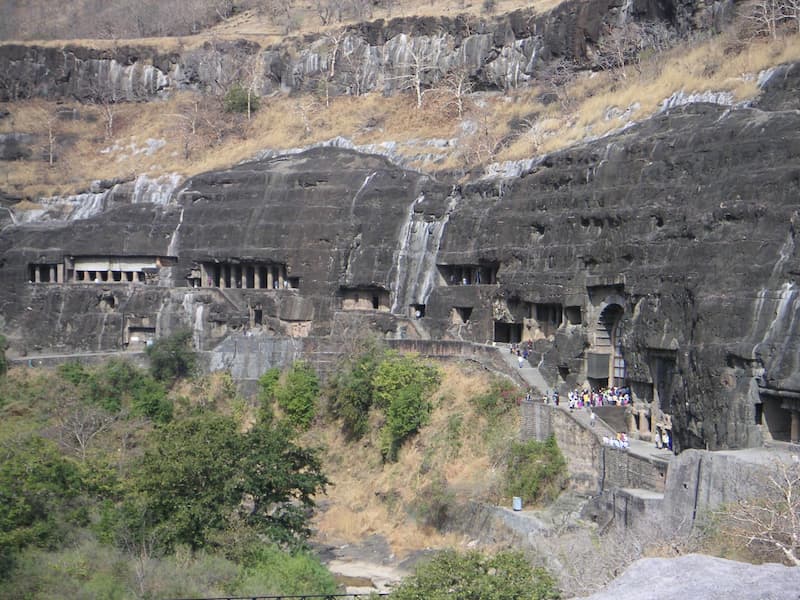
The Ajanta Caves are a monumental series of 29 rock-cut Buddhist temples and monasteries dating from the 2nd century BCE to 480 CE. Carved into a horseshoe-shaped cliff along the Waghur River in Maharashtra, India, they represent the pinnacle of ancient Indian wall painting and sculpture.
The complex consists of two types of caves: Viharas (monastic living quarters) and Chaityas (prayer halls).
- The Murals: The site is world-renowned for its tempera-style frescoes, which depict the Jataka tales (previous lives of the Buddha) with extraordinary emotional depth and natural pigments that have survived for nearly two millennia.
- The Sculpture: Massive stone carvings, including the 7-meter-long Reclining Buddha in Cave 26, demonstrate the transition of Buddhist art from symbolic to anthropomorphic forms.
- The Discovery: The caves were “lost” to the jungle for over a thousand years before being accidentally rediscovered by a British tiger-hunting party in 1819.
Attraction
Ajanta is a primary destination for those interested in Buddhist art and Silk Road history. It offers a rare, immersive look at an entire millennium of religious evolution. The stunning natural setting of the ravine, combined with the technical marvel of excavating massive temples from solid basalt using only hand tools, draws art historians and spiritual seekers alike.

Heritage
Inscribed in 1983, the Ajanta Caves are recognized under four cultural criteria:
- Criterion (i): A unique artistic achievement representing the peak of ancient Indian painting.
- Criterion (ii): Its style exerted a profound influence on religious art across Asia, extending to Java and Sri Lanka.
- Criterion (iii): The site bears exceptional testimony to the evolution of Indian art and the religious/intellectual centers of the ancient Buddhist community.
- Criterion (vi): It is directly associated with the history of Buddhism and its spread as a major global philosophy.
Gateway
- City: Aurangabad serves as the essential gateway city.
- Airport: Aurangabad Airport (IXU) is a commercial domestic airport with frequent flights from Mumbai, Delhi, and Hyderabad.
- Lodging: The city offers extensive options, from luxury stays like Welcomhotel by ITC Hotels (Rama International) to heritage-style boutiques like Vivanta Aurangabad.
When
- Winter (October to March): The weather is cool (10^C to 25^C) and dry, which is perfect for the 100km drive from the city and the extensive walking required at the site.
- Monsoon (July to September): The surrounding landscape turns vibrant green and a waterfall flows over the caves, though high humidity can be challenging for some.

Consideration
- Monday Closure: The Ajanta Caves are strictly closed on Mondays (the nearby Ellora Caves are closed on Tuesdays).
- No Flash: Photography is allowed, but flash is strictly forbidden to protect the sensitive ancient murals.
- Physicality: The site involves significant walking and climbing uneven stone steps. Wear sturdy, comfortable shoes.
- Travel Time: The caves are roughly a 3-hour drive from Aurangabad; it is best to hire a private car for the full day.

Resources
- Archaeological Survey of India (ASI): The official government portal for history and conservation updates.
- UNESCO World Heritage – Ajanta: The definitive page for heritage status and maps.
- Maharashtra Tourism – Ajanta: Practical regional travel guides and information on the local “MTDC” resort near the site.
- Digital Ajanta: Part of Google Arts & Culture, offering high-definition digital scrolls of the murals.
- Expedia – Aurangabad Tours: A helpful site for booking transport and private guides from Aurangabad to the caves.


Comments:
2 responses to “Ajanta Caves”
-
I don’t use the world ‘awesome’ much, but it applies here.
-
The Ajanta Caves are a must-visit on any India trip. These ancient marvels showcase the rich cultural heritage of India through intricate sculptures and vibrant frescoes.


.jpg)
Leave a Reply to AnonymousCancel reply