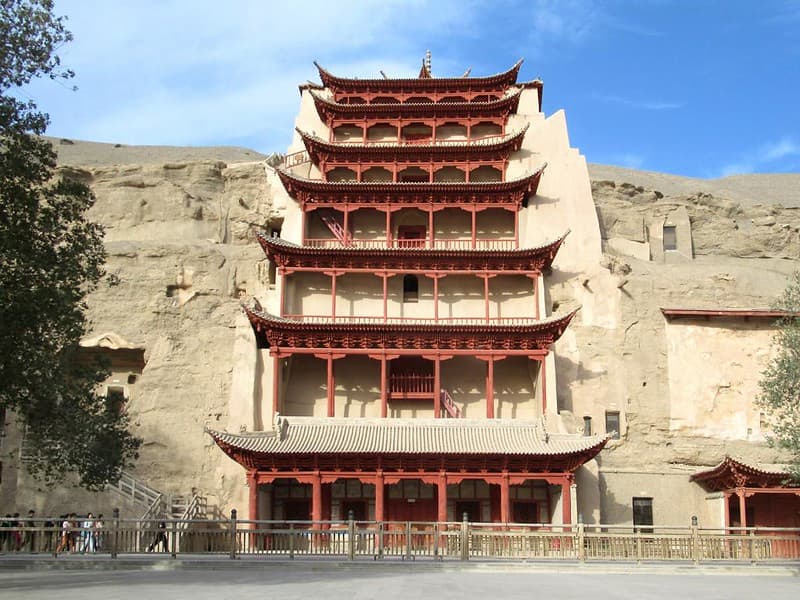
The Mogao Caves, also known as the “Caves of the Thousand Buddhas,” are a spectacular desert oasis of art and spirituality located at a strategic crossroads on the ancient Silk Road in Gansu Province, China.
Carved into a 1.6-kilometer-long cliff face, the Mogao Caves comprise a system of 492 preserved temples and sanctuaries.
- The Art: The caves house approximately 45,000 square meters of murals and more than 2,000 painted sculptures, spanning a thousand years of Buddhist history from the 4th to the 14th century.
- The Architecture: The site features five levels of caves ranging from tiny meditation cells to massive halls housing giant Buddhas, including a 35-meter-tall seated figure in the iconic nine-story “Great North Gate.”
- The Library Cave: In 1900, a secret chamber (Cave 17) was discovered containing over 50,000 manuscripts, scrolls, and textiles in multiple languages, providing a unique window into the multicultural life of medieval Eurasia.
Attraction
Mogao is a “bucket list” destination for its status as the world’s most significant repository of Buddhist art.
- Silk Road Legacy: It represents the fusion of Chinese, Indian, Persian, and Greek artistic influences.
- Visual Grandeur: The sheer scale of the murals—forty times the area of the Sistine Chapel—is a visual marvel that attracts historians, pilgrims, and photographers alike.
- Modern Experience: Visitors start at a high-tech Digital Exhibition Center, watching 8K immersive films that provide a close-up view of caves that are otherwise too dark or fragile to enter.

Heritage
Inscribed in 1987, Mogao Caves met all six UNESCO cultural criteria—a rare feat.
- Criterion (i): A unique artistic achievement representing the evolution of Chinese art over a millennium.
- Criterion (ii): A decisive site for artistic and religious exchange between China, Central Asia, and India.
- Criterion (vi): Directly associated with the spread of Buddhism in East Asia and the development of the “Dunhuang Studies” academic discipline.
Gateway
- The City: The oasis city of Dunhuang is the immediate gateway.
- Airport: Dunhuang Airport (DNH) serves as the primary commercial hub, with regular flights from Beijing, Shanghai, Xi’an, and Lanzhou.
- Lodging: Dunhuang offers a variety of accommodation, from luxury stays like The Silk Road Dunhuang Hotel (noted for its traditional architecture) to modern boutiques and budget-friendly hostels in the city center.
When
- Primary Window (May to October): The weather is warm and dry, ideal for visiting both the caves and the nearby Mingsha Sand Dunes.
- Peak Autumn (September to October): This is often considered the “golden window” with clear skies and the most comfortable temperatures.
- Avoid: The first week of October (China’s National Day) due to extreme domestic crowds. March and April should be approached with caution due to frequent sandstorms.

Consideration
- Mandatory Reservations: Tickets must be booked well in advance (up to 30 days) via the official website or WeChat. Daily visitor numbers are strictly capped to protect the murals from carbon dioxide and humidity.
- No Photography: Photography is strictly prohibited inside the caves. Guides use special low-impact flashlights to show details; bringing your own flashlight is unnecessary.
- Limited Access: A standard ticket typically includes a guide and access to 8 caves. If you want to see “Special Caves,” you must pay additional fees (often 150–200 RMB per cave).
- ID Required: International travelers must present their physical passport for entry and to collect tickets.

Resources
- Dunhuang Academy (Official): The definitive portal for site management, research, and high-definition digital tours of the caves.
- UNESCO World Heritage – Mogao Caves: For official documentation, maps, and historical context of the site’s universal value.
- International Dunhuang Programme (IDP): A resource for viewing the thousands of manuscripts from the Library Cave currently held in international collections.
- China Highlights – Dunhuang Guide: Practical travel logistics, weather updates, and itinerary planning for international visitors.
- Klook – Dunhuang Tours: A convenient platform for booking English-speaking day tours and airport transfers.
Featured Image
Mogao Cave 96 (David Stanley, Flickr/CC BY 2.0).
In The News
Advertisement


Comment:
One response to “Mogao Caves”
-
The painting is superb, the painting is unbelievable, the paintings are just masterworks of paintings, and in a variety of styles over the dynasties as they changed. History is here, art is here.
LikeLike

 All About World Heritage Sites

Leave a reply to Aurel Cancel reply