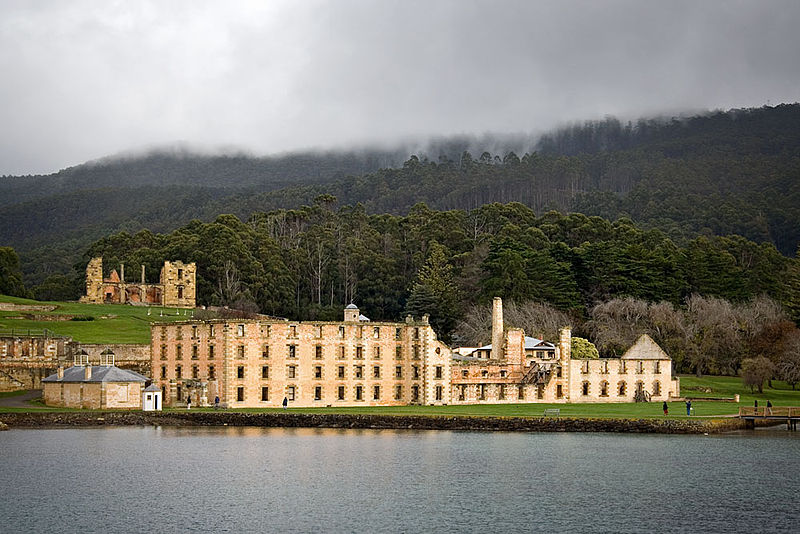
 Australia
S33 22 42 E150 59 40
Date of Inscription: 2010
Criteria: (iv)(vi)
Property : 1,502.51 ha
Buffer zone: 3,746.68 ha
Ref: 1306
News Links/Travelogues:
The property includes a selection of eleven penal sites, among the thousands established by the British Empire on Australian soil in the 18th and 19th centuries. The sites are spread across Australia, from Fremantle in Western Australia to Kingston and Arthur’s Vale on Norfolk Island in the east; and from areas around Sydney in New South Wales in the north, to sites located in Tasmania in the south. Around 166,000 men, women and children were sent to Australia over 80 years between 1787 and 1868, condemned by British justice to transportation to the convict colonies. Each of the sites had a specific purpose, in terms both of punitive imprisonment and of rehabilitation through forced labour to help build the colony. The Australian Convict Sites presents the best surviving examples of large-scale convict transportation and the colonial expansion of European powers through the presence and labour of convicts.

The property consists of eleven complementary sites. It constitutes an outstanding and large-scale example of the forced migration of convicts, who were condemned to transportation to distant colonies of the British Empire; the same method was also used by other colonial states.
The sites illustrate the different types of convict settlement organized to serve the colonial development project by means of buildings, ports, infrastructure, the extraction of resources, etc. They illustrate the living conditions of the convicts, who were condemned to transportation far from their homes, deprived of freedom, and subjected to forced labour.
This transportation and associated forced labour was implemented on a large scale, both for criminals and for people convicted for relatively minor offences, as well as for expressing certain opinions or being political opponents. The penalty of transportation to Australia also applied to women and children from the age of nine. The convict stations are testimony to a legal form of punishment that dominated in the 18th and 19th centuries in the large European colonial states, at the same time as and after the abolition of slavery.
The property shows the various forms that the convict settlements took, closely reflecting the discussions and beliefs about the punishment of crime in 18th and 19th century Europe, both in terms of its exemplarity and the harshness of the punishment used as a deterrent, and of the aim of social rehabilitation through labour and discipline. They influenced the emergence of a penal model in Europe and America.
Within the colonial system established in Australia, the convict settlements simultaneously led to the Aboriginal population being forced back into the less fertile hinterland, and to the creation of a significant source of population of European origin.
Criterion (iv): The Australian convict sites constitute an outstanding example of the way in which conventional forced labour and national prison systems were transformed, in major European nations in the 18th and 19th centuries, into a system of deportation and forced labour forming part of the British Empire’s vast colonial project. They illustrate the variety of the creation of penal colonies to serve the many material needs created by the development of a new territory. They bear witness to a penitentiary system which had many objectives, ranging from severe punishment used as a deterrent to forced labour for men, women and children, and the rehabilitation of the convicts through labour and discipline.
Criterion (vi): The transportation of criminals, delinquents, and political prisoners to colonial lands by the great nation states between the 18th and 20th centuries is an important aspect of human history, especially with regard to its penal, political and colonial dimensions. The Australian convict settlements provide a particularly complete example of this history and the associated symbolic values derived from discussions in modern and contemporary European society. They illustrate an active phase in the occupation of colonial lands to the detriment of the Aboriginal peoples, and the process of creating a colonial population of European origin through the dialectic of punishment and transportation followed by forced labour and social rehabilitation to the eventual social integration of convicts as settlers.
Suggested Bases:
Sydney is the Harbour City, and is the largest, oldest and most cosmopolitan city in Australia with an enviable reputation as one of the world’s most beautiful and liveable cities. Brimming with history, nature, culture, art, fashion, cuisine and design, it is set next to miles of ocean coastline and sandy surf beaches. The city is also home to the Sydney Opera House and the Sydney Harbour Bridge, two of the most iconic structures on the planet. Sydney is a major global city and an important finance centre in the Asia-Pacific region. The city is surrounded by nature and national parks, which extend through the suburbs and right to the shores of the harbour. Sydney has a compact city core surrounded by sprawling suburbs, forming a vast metropolitan area. The city core, Central Sydney is shaped roughly like a stubby palm-up left hand: the heel of the thumb as City South, the thumb as the district Darling Harbour, the first finger as The Rocks, the palm with the second and third fingers as City Centre and the rest as City East [read more].
Perth is the capital and largest city of Western Australia. It is separated from Adelaide (the nearest city with over one million inhabitants) by a distance of 2,139 km, including the vast spaces of the Nullarbor Plain. Perth spreads out along on a flat coastal plain, dissected by the Swan River, and spreads over the Darling Scarp to the east. The Indian Ocean coastline to the west is its only distinct physical boundary. Perth has a population of over 2 million (2018), making it the fourth largest city in Australia. The official “City of Perth” is a small area on the north side of the Swan River, consisting of just the city centre. However, the Perth metropolitan area is much larger, spreading in all directions other than the ocean. The Perth region has been home to the Indigenous Nyoongar people for at least the past 40,000 years. British settlers established a free settler colony in 1829 as part of the Swan River Colony [read more].
Newcastle is a city at the mouth of the Hunter River, approximately 150 km north of Sydney in the Hunter region of New South Wales, Australia. The city is the focal point for the diverse Hunter region that encompasses beaches and mountains, restaurants and wineries. Newcastle is a great place for surfers, wine buffs, bush walkers, and anyone interested in Australian history. The second largest city in the state of NSW and sixth largest in Australia, Newcastle city had a population of 153,000 and the suburban area of over 500,000. Similar to its English namesake, Newcastle was an important centre for the coal mining and iron ore industries. Newcastle is Australia’s oldest sea port, and the second most important in the country in terms of overall tonnage, and significant for coal exports. Many Novocastrians take an avid interest in sports, as participants, spectators or both. The local NRL Rugby League team, the Newcastle Knights are widely followed [read more].
 All About World Heritage Sites

