
 United Kingdom of Great Britain and Northern Ireland
Lothian Region, Scotland
N55 57 0 W3 13 0
Date of Inscription: 1995
Criteria: (ii)(iv)
Ref: 728
News/Travelogue: United Kingdom Of Great Britain And Northern Ireland; GB – Old And New Towns Of Edinburgh
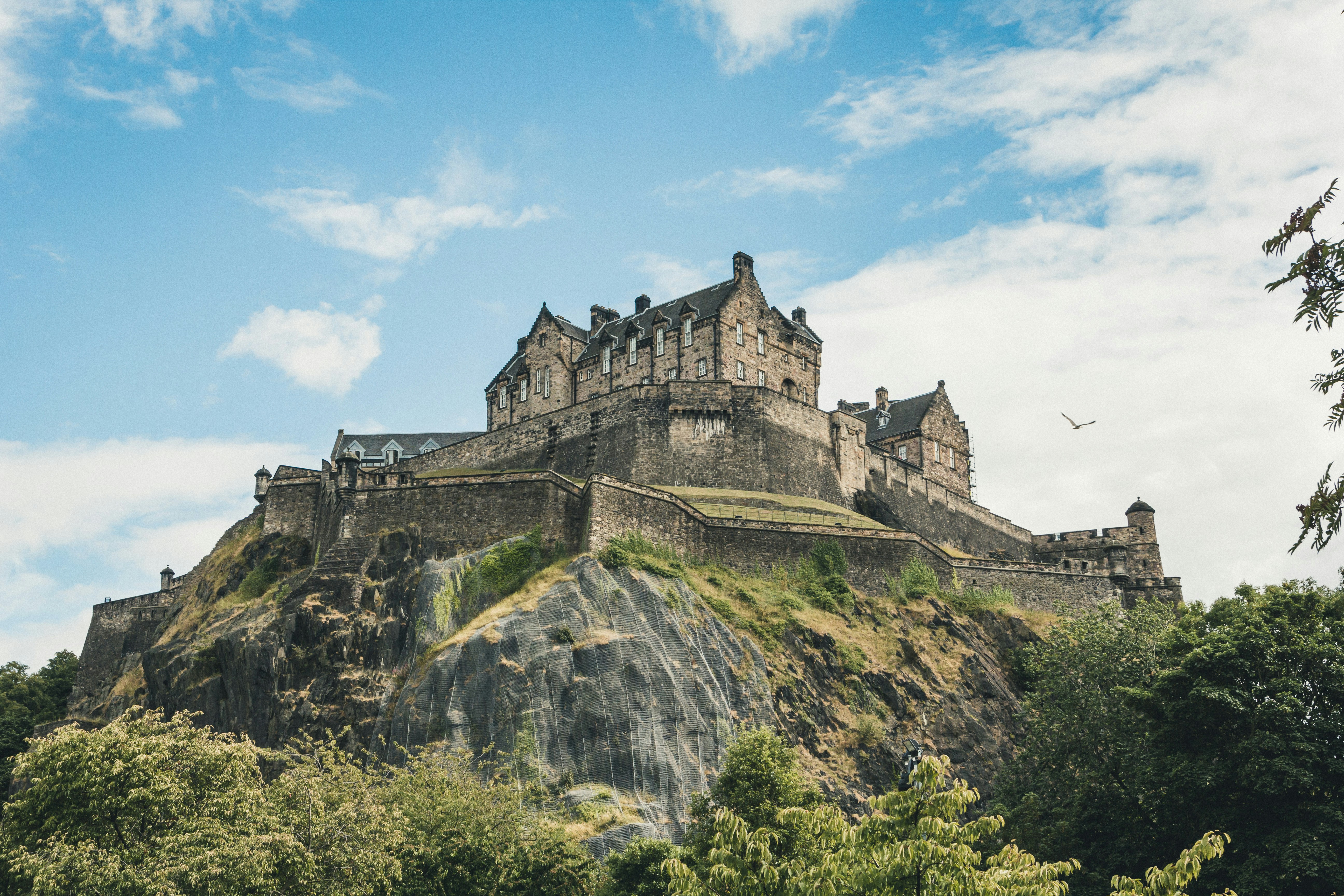
The remarkable juxtaposition of two clearly articulated urban planning phenomena. The contrast between the organic medieval Old Town and the planned Georgian New Town of Edinburgh, Scotland, provides a clarity of urban structure unrivalled in Europe. The juxtaposition of these two distinctive townscapes, each of exceptional historic and architectural interest, which are linked across the landscape divide, the “great arena” of Sir Walter Scott’s Waverley Valley, by the urban viaduct, North Bridge, and by the Mound, creates the outstanding urban landscape.
The Old Town stretches along a high ridge from the Castle on its dramatically situated rock down to the Palace of Holyrood. Its form reflects the burgage plots of the Canongate, founded as an “abbatial burgh” dependent on the Abbey of Holyrood, and the national tradition of building tall on the narrow “tofts” or plots separated by lanes or “closes” which created some of the world’s tallest buildings of their age, the dramatic, robust, and distinctive tenement buildings. It contains many 16th and 17th century merchants’ and nobles’ houses such as the early 17th century restored mansion house of Gladstone’s Land which rises to six storeys, and important early public buildings such as the Canongate Tolbooth and St Giles Cathedral.
The Old Town is characterized by the survival of the little-altered medieval “fishbone” street pattern of narrow closes, wynds, and courts leading off the spine formed by the High Street, the broadest, longest street in the Old Town, with a sense of enclosed space derived from its width, the height of the buildings lining it, and the small scale of any breaks between them.
The New Town, constructed between 1767 and 1890 as a collection of seven new towns on the glacial plain to the north of the Old Town, is framed and articulated by an uncommonly high concentration of planned ensembles of ashlar-faced, world-class, neo-classical buildings, associated with renowned architects, including John and Robert Adam (1728-92), Sir William Chambers (1723-96), and William Playfair (1790-1857). Contained and integrated with the townscape are gardens, designed to take full advantage of the topography, while forming an extensive system of private and public open spaces. The New Town is integrated with large green spaces. It covers a very large area of 3,288 ha, is consistent to an unrivalled degree, and survives virtually intact.
Some of the finest public and commercial monuments of the New-classical revival in Europe survive in the city, reflecting its continuing status as the capital of Scotland since 1437, and a major centre of thought and learning in the 18th century Age of Enlightenment, with its close cultural and political links with mainland Europe.
The successive planned extensions from the first New Town, and the high quality of the architecture, set standards for Scotland and beyond, and exerted a major influence on the development of urban architecture and town planning throughout Europe.
The dramatic topography of the Old Town combined with the planned alignments of key buildings in both the Old and the New Town, results in spectacular views and panoramas and an iconic skyline.
The renewal and revival of the Old Town in the late 19th century, and the adaptation of the distinctive Baronial style of building for use in an urban environment, influenced the development of conservation policies for urban environments.
Criterion (ii): The successive planned extensions of the New Town, and the high quality of its architecture, set standards for Scotland and beyond, and exerted a major influence on the development of urban architecture and town planning throughout Europe, in the 18th and 19th centuries.
Criterion (iv): The Old and New Towns together form a dramatic reflection of significant changes in European urban planning, from the inward looking, defensive walled medieval city of royal palaces, abbeys and organically developed burgage plots in the Old Town, through the expansive formal Enlightenment planning of the 18th and 19th centuries in the New Town, to the 19th century rediscovery and revival of the Old Town with its adaptation of a distinctive Baronial style of architecture in an urban setting.
Suggested Base
Edinburgh is the capital of Scotland located in the Central Belt region of the country. With a population of approximately 450,000 (1 million in the city region), Edinburgh fizzes with a cosmopolitan yet uniquely Scottish atmosphere. Old volcanoes ensure a dramatic natural setting, with the imposing castle atop one. Beneath its guard, the city combines medieval relics, Georgian grandeur and a powerful layer of modern life with contemporary avant-garde. Medieval palaces, Gothic churches and fascinating historical buildings rub shoulders with the best of modern architecture, such as the Houses of Scottish Parliament and the refurbished National Museum of Scotland. [read more]
Glasgow (Gaelic: Glaschu, Scots: Glesga) is the largest city in Scotland and the fourth-largest in the UK; with a population of about 600,000 in the city itself and over 2,000,000 if the surrounding towns of the Clydeside conurbation are taken into account. Located at the west end of Scotland’s Central Belt on the banks of the River Clyde, Glasgow’s historical importance as Scotland’s main industrial centre has been challenged by decades of socio-economic and political change alongside various regeneration efforts. Despite this, Glasgow remains one of the nation’s key economic centres outside of London. [read more]
Newcastle upon Tyne is a port city in the North East of England. It has a population of 250,000 but including the surrounding urban area its population is almost 1 million. It has among the best nightlife in all of Britain, and has a distinct Geordie vernacular. Newcastle is a lively and diverse city, known for its nightlife, art, music and sports. Compact, attractive and friendly, it is one of England’s core cities and is a centre of culture, architecture and business. Newcastle is a starting point for tours of the Northumberland coast and Hadrian’s Wall. [read more]
 All About World Heritage Sites