 France
Department of Gironde, Region of Aquitaine
N44 50 20 E0 34 20
Date of Inscription: 2007
Criteria: (ii)(iv)
Property : 1,731 ha
Buffer zone: 11,974 ha
Ref: 1256
News Links/Travelogues:
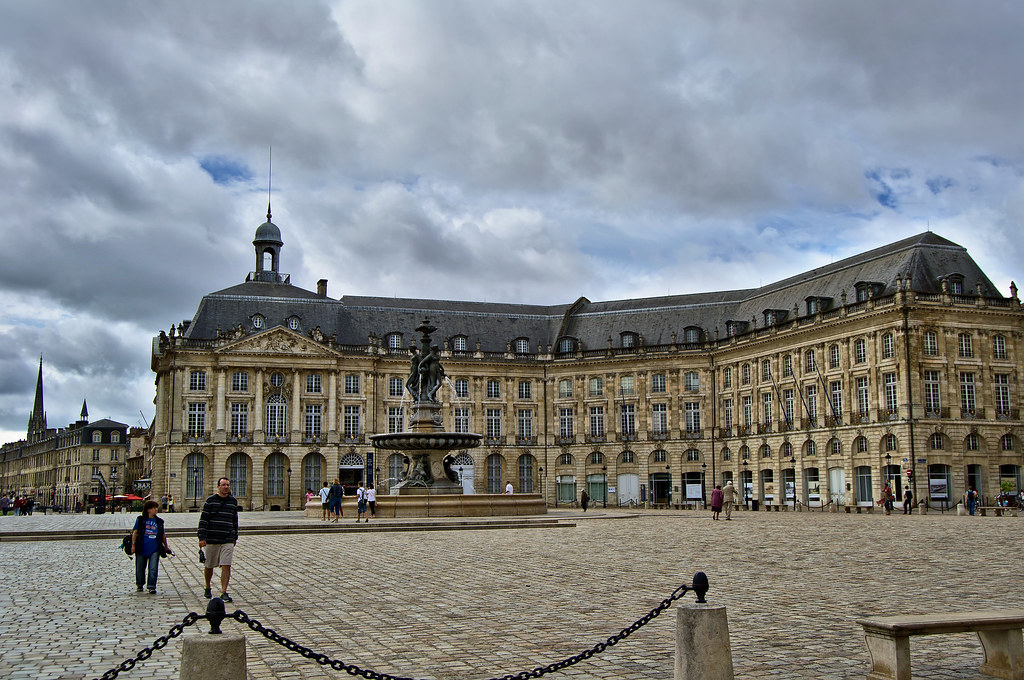
The Port of the Moon, port city of Bordeaux in south-west France, is inscribed as an inhabited historic city, an outstanding urban and architectural ensemble, created in the age of the Enlightenment, whose values continued up to the first half of the 20th century, with more protected buildings than any other French city except Paris. It is also recognized for its historic role as a place of exchange of cultural values over more than 2,000 years, particularly since the 12th century due to commercial links with Britain and the Low Lands. Urban plans and architectural ensembles of the early 18th century onwards place the city as an outstanding example of innovative classical and neoclassical trends and give it an exceptional urban and architectural unity and coherence. Its urban form represents the success of philosophers who wanted to make towns into melting pots of humanism, universality and culture.

Bordeaux, Port of the Moon, is an outstanding example of the exchange of human values over more than two thousand years, due to its role as capital city of a world-famous wine production region and the importance of its port in commerce at regional and international levels. The urban form and architecture of the city are the result of continuous extensions and renovations since Roman times up to the 20th century. Urban plans and architectural ensembles stemming from the early 18th century onwards place the city as an outstanding example of classical and neo-classical trends and give it an exceptional urban and architectural unity and coherence.
Criterion (ii): Bordeaux, Port of the Moon, constitutes an exceptional testimony to the exchange of human values over more than two thousand years. These exchanges have provided this cosmopolitan town, in the age of Enlightenment, an unparalleled prosperity that provided for an exceptional urban and architectural transformation that continued through 19th century up to present time. The different stages of construction and development of the harbour town are legible in its urban plan, especially the big transformations carried out from the early 18th century onwards.
Criterion (iv): Bordeaux, Port of the Moon, represents an outstanding urban and architectural ensemble, created in the Age of Enlightenment, whose values have continued up to the first half of the 20th century. Bordeaux is exceptional in the unity of its urban and architectural classical and neo-classical expression, which has not undergone any stylistic rupture over more than two centuries. Its urban form represents the success of philosophers who wanted to make towns into melting pots of humanism, universality and culture.
Suggested Bases:
Bordeaux is famous for its wines. It deserves to be equally famous for its magnificent neo-classical waterfront and old town, a UNESCO World Heritage Site Bordeaux and the whole province of Aquitaine came under English rule for 300 years from 1154, when Eleanor of Aquitaine married the future King Henry II. The English rulers enjoyed drinking the wines of Bordeaux, but they enjoyed the profits even more – trade with Bordeaux was their largest source of income. Most wine came from the Graves region just upriver from the city, and this was a clear, deep rosé called clairet, still produced today. The English came to call any Bordeaux red wine “claret”. In 1453 France took control of Aquitaine and cut off the supply to England, which ceased to drink wine for the next 500 years, turning to beer and gin. This caused a slump in Bordeaux, which only revived from the 16th century through trans-Atlantic trade [read more].
Merignac is a commune in the Gironde department in Nouvelle-Aquitaine in southwestern France. The 20th-century historian Robert Étienne (1921–2009) was born in Mérignac. It is the largest suburb of the city of Bordeaux and adjoins it to the west. It is a member of the metropolitan Urban Community of Bordeaux. Mérignac is the site of Bordeaux International Airport. The name Mérignac derives from the Gallo-Roman word Matriniacus, name of a villa rustica (countryside villa) that was the origin of today’s town [read more].
Limoges is a city in the Limousin region of France. Get in via Limoges International Airport. Served by Ryanair from East Midlands, London-Stansted, Manchester year-round. Ryanair is served from Bristol and Leeds/Bradford seasonally. See Bridges of Saint Martial and St-Etienne; Botanical gardens including Jardin botanique de l’Evêché and Jardin botanique alpin “Daniella”; Gothic Cathedral; Chateau de La Borie is home to the Centre Culturel de Recontre de la Borie et l’Ensemble Baroque de Limoges; Crypt of Saint Martial; Church of St-Michel-des-Lions houses the relics of relics of St. Martial and has stain glassed windows. It also has the most striking feature including the 65 m high tower with a spire surmounted by a big bronze ball; The Castle with 12-metre-high walls; The railway station, Gare de Limoges Bénédictins, inaugurated in 1929 and built in Byzantine style [read more].
 All About World Heritage Sites
