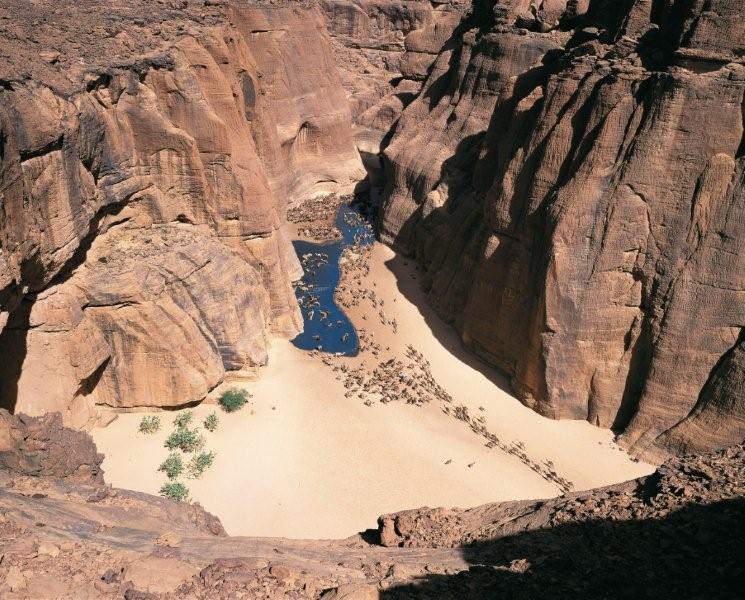

The Ennedi Massif and surrounding rock art in Chad is to be found in the northeastern region of the country in the Ennedi Plateau, which is located in the Ennedi Region of the nation. The site is a giant and impressive bulwark that is located in the Sahara Desert that is surrounded by sands and has magnificent deep valleys, towers, arches and pillars that have all been formed over millennium by the forces of nature. The total site is around 35,000 square kilometers (13,513 square miles) in size. The area is also noted for its rock paintings found throughout the site that have made it an important area for human history and culture, apart for its natural beauty and the rare animals species that can be found in the area.
The Ennedi Massif is made of sandstone that has been shaped, sculpted, and eroded over thousands upon thousands of years by the various forces of nature, such as rain/water and wind erosion. This has turned the rock into spectacular landscape marked by cliffs, valleys, natural arches, towers, pitons and other various and unique forms that we are able to see today.
In the largest canyons, the permanent presence of water plays an essential role in the Massif’s ecosystem, sustaining flora and fauna as well as human life for a long time. The site has been located in relative isolation for much of its history, as it is located in the middle of the Sahara Desert.
Presence of water is one of the reasons why the Ennedi Massif has so much rock art. The Ennedi Massif area presents one of the largest ensembles of rock art in Sahara. It is rich in petroglyphs, a form of rock paintings. It have been painted and carved into the rock surface of caves, canyons and shelters. Those that have been found in the area date to being anywhere between 7,000 to 2,000 years old. These thousands of images comes in either red, orange or white colors and is either represented as humans or various animals. These animals done in the paintings include crocodiles, camels, horses, birds, lions, cheetahs and more. The Ennedi Massif’s most notable rock art is at the Niola Doa site that is made up of mostly engraved signs that makeup nearly life sized female figures that were discovered in fragments around half of a century ago. The art at the Niola Doa site dates to be around 7,000 years old.
The Ennedi Massif in Chad has a varied and rich collection of fauna that can be found in the area. The site is also home to the rare site of the Desert Crocodile (Crocodylus suchus) that was once found all around the Sahara region but today has scattered remnant populations, one of which is found in the Ennedi Massif. They are unique from other remnants due to there dwarfism which developed overtime due to isolation and are found in the scarce pools in the river canyons, such as the Guelta d’Archei, which is one of the most famous gueltas in the Sahara. The threatened Sudan cheetah (Acinonyx jubatus soemmeringii) can be found in remote parts of the area. The area was also home to the threatened West African lion (Panthera leo senegalensis) until the 1940’s and the Scimitar oryx (Oryx dammah), which is now extinct in the wild.
Travelogue:
Apr 02 2017 – 8,000 Year-Old Rock Art in Chad Vandalized; Elizabeth; History Things
Mar 21 2017 – Cave paintings at world heritage site defaced; AFP
Mar 20 2017 – Chad’s ancient Ennedi cave paintings defaced; BBC News
 All About World Heritage Sites

