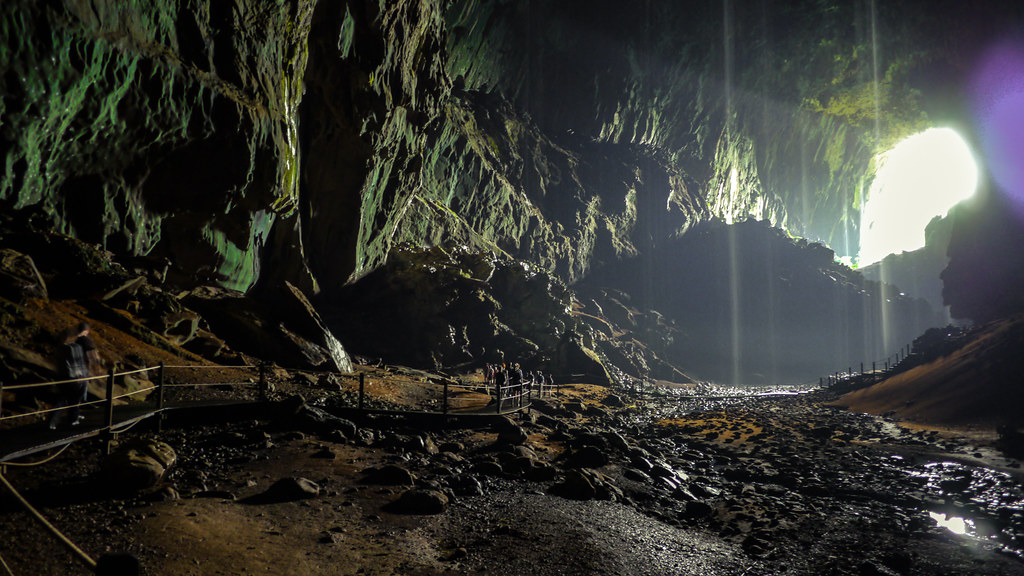
Gunung Mulu National Park
Here is the travel dossier for Gunung Mulu National Park in Sarawak, Malaysia.
1. Description of the Site
Gunung Mulu National Park, located on the island of Borneo in the Malaysian state of Sarawak, is one of the most significant and awe-inspiring wilderness areas in Southeast Asia. Spanning over 528 square kilometers of primary tropical rainforest, the park is dominated by three mountains: the sandstone Gunung Mulu (2,376m) and the limestone massifs of Gunung Api and Gunung Benarat.
The site is globally famous for its massive limestone karst system, which includes some of the world’s largest and most intricate cave networks hidden beneath the jungle floor. Above ground, the park features “The Pinnacles”—razor-sharp limestone spires that rise 45 meters above the forest canopy—and a diverse range of 17 vegetation zones teeming with endemic flora and fauna.
2. What Makes It an Attraction to Tourists Worldwide?
Gunung Mulu is a bucket-list destination for adventurers and nature enthusiasts due to its “world-record” natural features:
- The Caves: It houses the Sarawak Chamber (the world’s largest cave chamber by area), Deer Cave (one of the world’s largest natural cave passages), and the Clearwater Cave System (the longest in Southeast Asia).
- The Bat Exodus: Every evening (weather permitting), millions of free-tailed bats emerge from Deer Cave in massive, spiraling black ribbons to forage for insects—a spectacular wildlife phenomenon visible from a dedicated viewing amphitheater.
- The Pinnacles: A grueling three-day trek leads to a viewpoint of the dramatic, jagged limestone peaks of Gunung Api, one of the most photographed geological formations in the world.
- Canopy Skywalk: One of the world’s longest tree-based canopy walks, stretching 480 meters and offering a bird’s-eye view of the ancient rainforest 25 meters above the ground.
3. What Makes It a UNESCO-Categorized Site?
Gunung Mulu was inscribed as a UNESCO World Heritage Site in 2000. It met all four natural criteria, an extremely rare achievement:
- Criterion (vii): For its exceptional natural beauty, from its primary forests and waterfalls to the massive limestone spires and enormous caves.
- Criterion (viii): It is an outstanding example of the Earth’s history, representing major stages in the tectonic and climatic evolution of Borneo through its karst geomorphology.
- Criterion (ix): It serves as a laboratory for ongoing ecological and biological processes in a tropical rainforest.
- Criterion (x): It is a biodiversity hotspot, home to 3,500 species of vascular plants, 109 species of palms, and thousands of animal species, many of which are endemic or rare.
4. Gateway City with Commercial Airport
The primary gateway to the park is the city of Miri, Sarawak.
- Commercial Airport: Miri Airport (MYY) is the main hub connecting to Mulu Airport (MZV). Because the park is exceptionally remote and surrounded by dense jungle with no public road access, the only practical way for tourists to reach it is via a short 30-minute flight from Miri on MASwings (a subsidiary of Malaysia Airlines).
- Lodging: Miri is a major city with a wide range of 4-star and 5-star hotels, while the park area itself offers sufficient overnight options ranging from the luxury Mulu Marriott Resort & Spa to the Park Headquarters’ dorms and local village homestays.
5. When Best to Be There?
The best time to visit is during the Dry Season (July to September).
- Reasoning: These months offer the most favorable conditions for trekking and caving. Heavy rain can cause cave systems to flood (leading to tour cancellations) and prevents the bat exodus from occurring.
- Note: While it can be visited year-round, the Monsoon season (November to February) brings the heaviest rainfall, making the challenging “Pinnacles” trek significantly more dangerous and slippery.
6. What Are the Things to Consider Before Going There?
- Flight Dependencies: Flights to Mulu are on small turboprop aircraft and are highly weather-dependent. Always build a “buffer day” into your itinerary for potential cancellations.
- Mandatory Guides: You cannot enter the caves or embark on major treks (like the Pinnacles or Mulu Summit) without a licensed park guide. It is essential to book these tours in advance via the official park website as group sizes are strictly limited.
- Physical Fitness: Many of Mulu’s highlights require high levels of fitness. The Pinnacles trek is notoriously steep and involves climbing vertical ladders.
- Limited Infrastructure: There are no banks, ATMs, or major pharmacies in Mulu. Bring sufficient Malaysian Ringgit (MYR) in cash and all necessary medications/repellents.
- Connectivity: WiFi and mobile data are extremely limited or non-existent once you leave the Park Headquarters or the Marriott.
7. Recommended Websites for More Information
- Official Mulu Park Website: The essential source for booking show cave tours, treks, and park-owned accommodation.
- URL:
https://mulupark.com/
- URL:
- UNESCO World Heritage Centre – Mulu: Detailed scientific and historical background on why the site is protected.
- URL:
https://whc.unesco.org/en/list/1013/
- URL:
- Sarawak Tourism Board: Provides regional travel tips, cultural information, and logistical guides for visiting Miri and Mulu.
- URL:
https://www.sarawaktourism.com/
- URL:
- MASwings: The only airline providing scheduled commercial flights into Mulu.
- URL:
https://www.maswings.com.my/
- URL:
- Agoda (Affiliate Marketing Site): A reliable platform for booking homestays and the Mulu Marriott Resort near the park entrance.
- URL: [Search “Mulu National Park” on Agoda.com]
Would you like me to check the current flight availability from Miri to Mulu for your travel dates?
-
Khuzestan Earthquake: Assessment of Shushtar Hydraulic System
by Tehran Times. A 5.6-magnitude earthquake struck Khuzestan, prompting inspections at the UNESCO-listed Shushtar Historical Hydraulic System. Authorities reported no damage after evaluations led by Amin Mahdavikia. The site, an ancient marvel of water engineering, continues to operate, showcasing Iran’s advanced historical hydraulic knowledge and sustainable water management ingenuity. Read more: Earthquake in Khuzestan: emergency…
 All About World Heritage Sites