
Archaeologists finally determined that these mysterious, giant stone jars were used, at least for a time, as funerary sites.
Source: Laos’s Plain of Jars revealed to be a burial site | Popular Science
Archaeologists finally determined that these mysterious, giant stone jars were used, at least for a time, as funerary sites.
Source: Laos’s Plain of Jars revealed to be a burial site | Popular Science
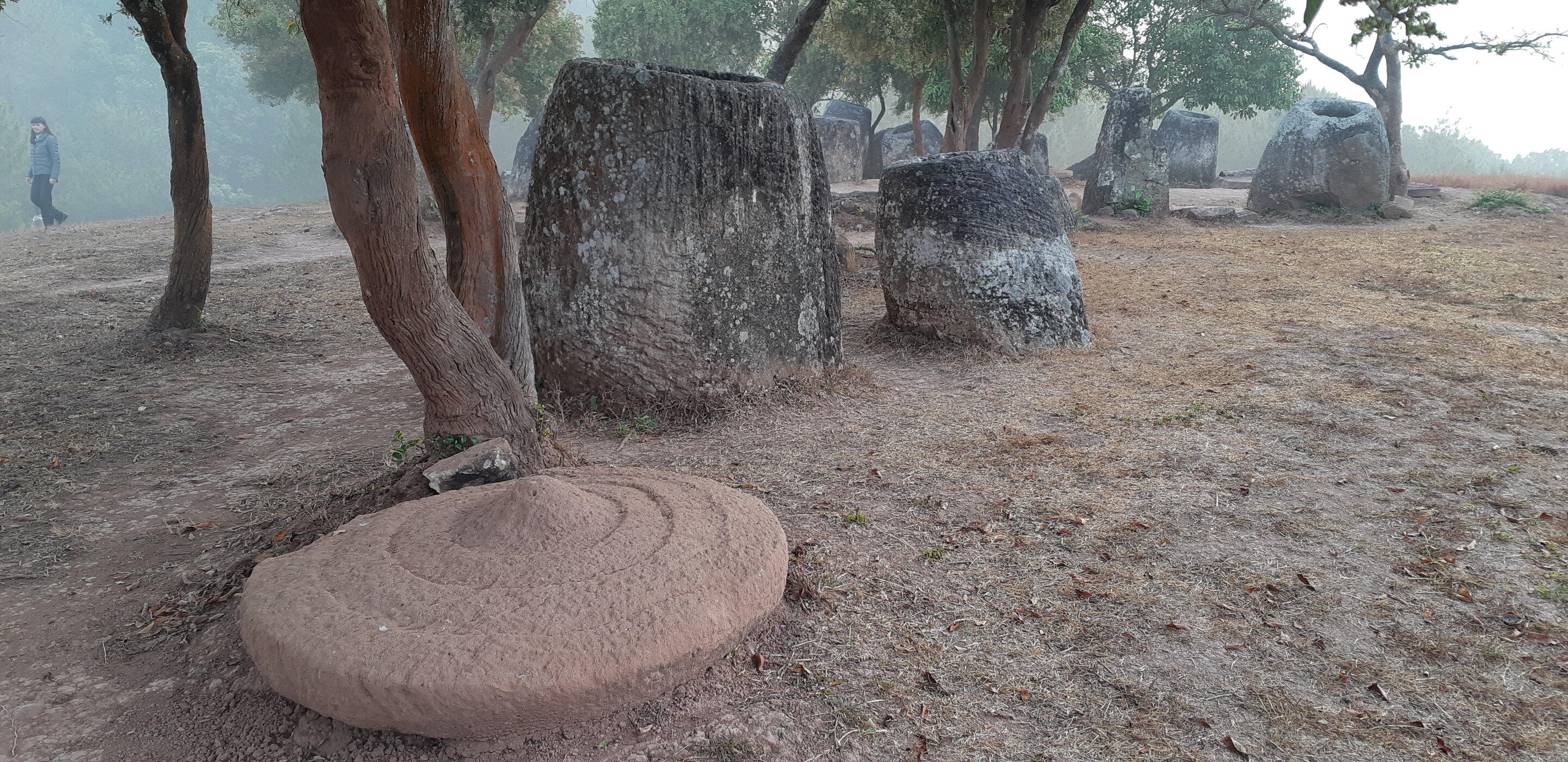
New research conducted at the UNESCO World Heritage listed ‘Plain of Jars’ in Laos has established the stone jars were likely placed in their final resting position from as early as 1240 to 660 BCE.
Source: Researchers solve more of the mystery of Laos megalithic jars
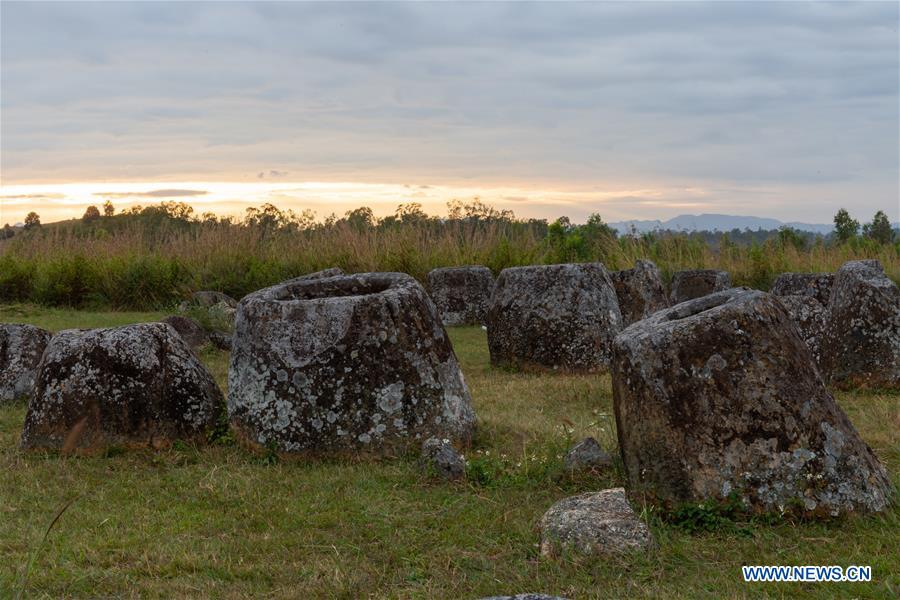
Photo taken on Nov. 3, 2020 shows the sunset view of the Plain of Jars, a megalithic archaeological landscape in Xieng Khuang province, Laos. The Plain of Jars, formally called the Megalithic Jar Sites, was officially inscribed on the World Heritage List at a meeting of the World Heritage Committee held in Baku, Azerbaijan, on July 10, 2019. The Plain of Jars is named for the more than 2,100 tubular-shaped megalithic stone jars that are believed to have been used for funerary practices in the Iron Age, according to the United Nations Educational, Scientific and Cultural Organization. (Photo by Kaikeo Saiyasane/Xinhua)

Laos is home to thousands of ancient jars – and experts believe they served a grim purpose In a remote corner of northeastern Laos, far from the well-trodden backpacking trail, a strange sight lurks in Southeast Asia’s Annamite Mountains. Across hundreds of square miles of hilly terrain, thousands of mysterious stone containers have been scattered.
Source: These Huge Ancient Jars In Laos Left Experts Baffled – Until A Chilling Theory For Their Use Emerged

THE mystical archeological location known as the ‘Plain of Jars’ in the Xieng Khuang province received official certification as a World Heritage site recently.
Source: Mystical ‘Plain of Jars’ gets World Heritage recognition
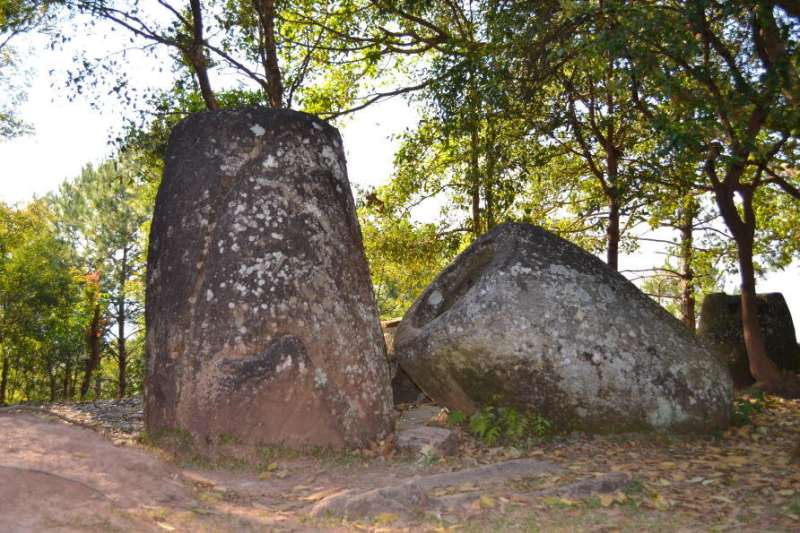
 All About World Heritage Sites